
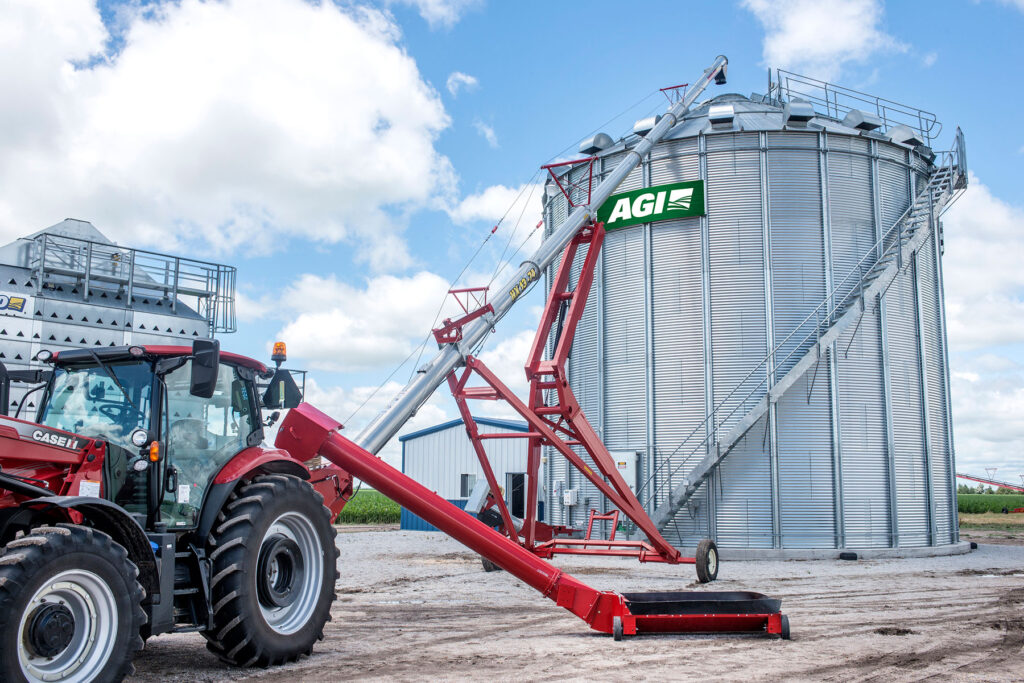
Good grain storage starts with the right plan. Different crops behave differently during harvest and in storage, so your grain management approach — from grain handling equipment settings to grain monitoring equipment checks and grain conditioning — should change with the crop. Below is a focused guide.
Why crop type matters
Grains vary in kernel size, oil content, moisture tolerance, and abrasiveness. Those differences determine how grain flows through augers, how it responds to drying and aeration, and how quickly residue builds up in equipment. A one-size-fits-all approach to grain bins, conveyors, or dryers invites damage, spoilage, and extra maintenance.
Quick equipment adjustments
Most farms or commercial operations use the same core grain handling equipment — augers, conveyors, grain legs, dryers, and bin aeration — but settings should be adjusted by crop.
- Corn: Durable but often high moisture at harvest. Use dryers and active grain conditioning. Moderate auger speeds and padded drop points reduce kernel cracking.
- Soybeans: Fragile and prone to splitting. Reduce auger speeds, minimize drop heights, and inspect for damage that lowers grade.
- Small grains (wheat, barley): Flowable but dusty. Increase fan speeds and sieve action in combines and clean screens regularly to prevent dust build-up in grain handling equipment and grain bins.
- Oilseeds (canola): Small, oily seeds that leave residues. Clean augers and dryers after use and use gentle handling to avoid seed cracking.
- Pulses (peas, lentils): Sensitive to impact and insect pressure. Use softer conveyors and ensure bins are sealed and monitored.
Monitoring: how often and what to watch
Modern grain monitoring equipment — temperature cables, moisture probes, and remote alert systems — is essential. Frequency of checks should match risk:
- First 2–4 weeks after filling bins: Check readings weekly at minimum; for higher-moisture or oily crops check 2–3× weekly. This is when moisture migration and hotspots are most likely.
- Once stabilized: Move to biweekly checks in temperate months; increase in summer or during large diurnal swings.
- Key signs: Rising temps, localized hot spots, moisture increases, condensation on bin roofs, or evidence of insect activity.
Place probes near walls and at multiple depths. Good grain management uses monitoring data to inform aeration runs and targeted inspection, not just to tick a box.
Timing Your Grain Management Activities
The timing of grain management tasks also varies depending on the crop.
Early Storage 
The first few weeks after filling grain bins are the most critical. During this time:
- Run aeration fans to equalize temperatures
- Monitor readings from grain monitoring equipment
- Watch for signs of heating or moisture buildup
Long-Term Storage
After grain has been properly cooled and stabilized through grain conditioning, monitoring can shift to a routine schedule. However, seasonal temperature changes can still affect stored grain, so consistent monitoring remains important.
Grain conditioning & aeration tips
Proper grain conditioning equals reduced risk. Drying and aeration methods differ by crop:
- Drying: Corn often requires active drying to reach long-term moisture targets. Soybeans and oilseeds need lower drying temperatures to protect seed integrity.
- Aeration: Use cool-night aeration to lower bulk temperature quickly and prevent insect development. For oily or high-moisture crops, run aeration more frequently to maintain uniform temperature and moisture.
- Temperatures: Avoid high drying temps for pulses and oilseeds; slow, steady conditioning preserves quality.
Maintenance & cleaning priorities
Residue and wear depend on crop:
- After oilseeds or pulses: Deep clean augers, dryers, and conveyors immediately. Oil residues can gum seals and foul dryers.
- Dusty small grains: Clean air intakes, fan housings, and filters more often to avoid fires and reduced airflow.
- Abrasive crops (rice, rough small grains): Inspect auger flighting, conveyor liners, and concaves; replace wear parts proactively.
Daily cleanup during harvest, a crop-change clean, and an end-of-season deep clean should be standard SOPs. Keep a maintenance log tied to crop type so patterns of wear are easy to spot.
A simple equipment checklist
- Calibrate moisture meters before harvest.
- Set combine and grain handling equipment settings for each crop.
- Install and verify grain monitoring equipment (probes, remote alerts).
- Run weekly checks for the first month; target biweekly after stabilization.
- Clean augers/dryers after oilseeds and perform seasonal deep cleans.
- Record and replace wear parts proactively for abrasive crops.
Building a Reliable Grain Storage System
Protecting stored grain requires a combination of the right infrastructure, well-maintained equipment, and proactive monitoring. By adapting grain handling equipment, maintaining reliable grain monitoring equipment, and implementing proper grain conditioning practices, growers can protect grain quality and reduce the risk of storage losses.
Work With Valley View Agri-Systems
If you want to get the most out of your grain storage system, the team at Valley View Agri-Systems is here to help. From designing efficient grain bin systems to installing advanced grain monitoring equipment and upgrading grain handling equipment, Valley View Agri-Systems provides solutions that support better grain management and reliable grain conditioning.